
Retail promotions depend on more than good design. A campaign can look strong on paper, but if display units, printed materials and supporting items arrive late, incomplete or in the wrong order, the customer experience quickly becomes uneven.
That is where organised POS distribution makes a real difference. It gives retailers, agencies and brand teams a practical way to move promotional materials with control, visibility and consistency, so every site has what it needs when it needs it.
Why consistency matters in retail rollouts
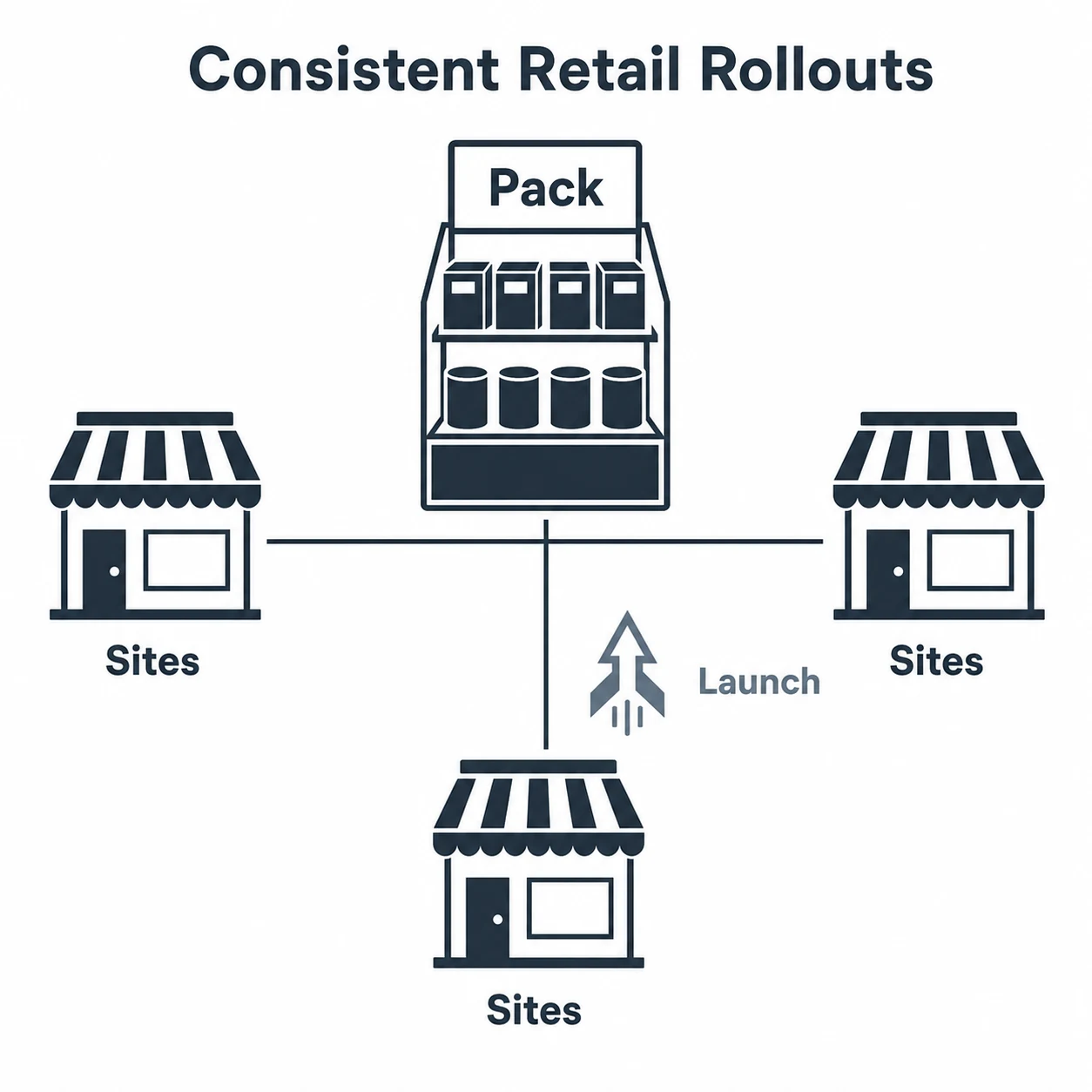
A retail rollout usually involves many moving parts. Posters, shelf strips, counter displays, window graphics, sample stock, branded materials and instruction packs may all need to arrive together or in a planned sequence. If one part is missing, the whole display can lose impact.
Consistency matters because customers rarely see the planning behind a promotion. They only see whether the offer is clear, the display is complete and the materials feel professional. When different sites receive different quantities, damaged items or late deliveries, the campaign becomes harder to manage and harder to measure.
Good POS distribution reduces that risk by treating promotional materials as a coordinated project, not just a collection of parcels. It helps teams think about what each site needs, how items should be grouped, what needs special handling and how delivery progress will be checked.
For businesses comparing specialist courier support, POS distribution for retail materials is useful because it focuses on the operational detail behind a campaign. The aim is not only to move goods from one place to another. It is to help each site receive the right materials in a condition that supports the campaign properly.
What organised POS distribution includes
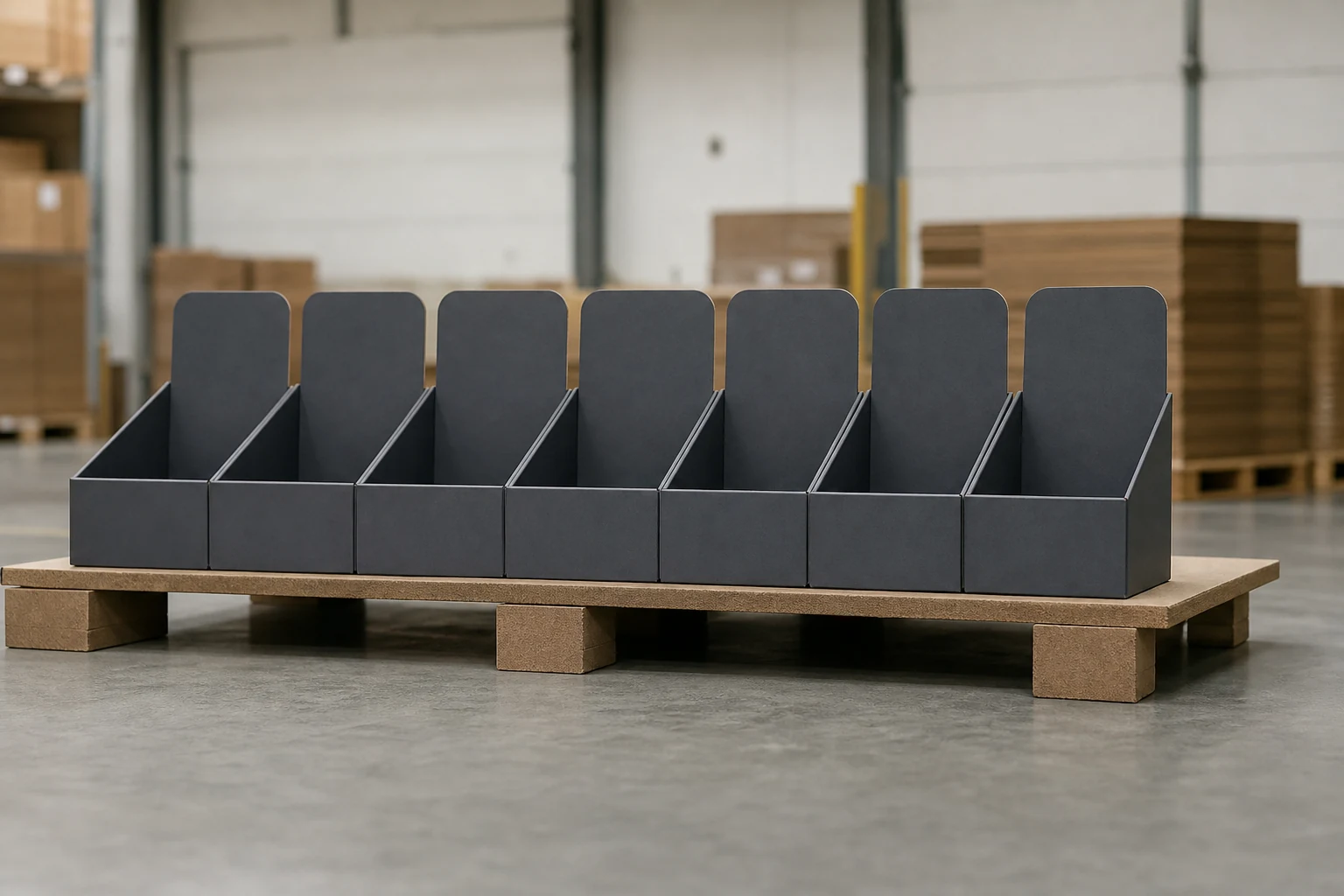
POS distribution can cover a wide range of materials. Some consignments are simple printed packs. Others include fragile display pieces, bulky units, mixed cartons or items that need to be kept separate for each destination. The best approach depends on the materials, the number of sites and the launch schedule.
A well planned distribution process usually starts with clear allocation. Each site should have a defined pack list, including quantities, item types and any special notes. This helps avoid confusion when several versions of a campaign are being sent out at the same time.
Labelling is just as important. Clear site references, contact details and handling notes help the courier team identify what is going where. If cartons are part of a set, they should be marked so receiving teams know they belong together.
Timing also needs thought. Some campaigns need all sites to receive materials before a single launch date. Others may work better with staged delivery, especially when stores have limited storage space or when installation teams need to visit in sequence. Planning the delivery pattern around the campaign reduces pressure on store teams and keeps materials from arriving too early or too late.
Organised POS distribution also benefits from practical packaging decisions. Retail materials can be awkward, especially if they include folded board, printed surfaces, display edges or fragile components. Businesses that want to prepare consignments well can use guidance on packaging goods for courier collection to reduce avoidable damage and handling problems.
How courier planning supports campaign control
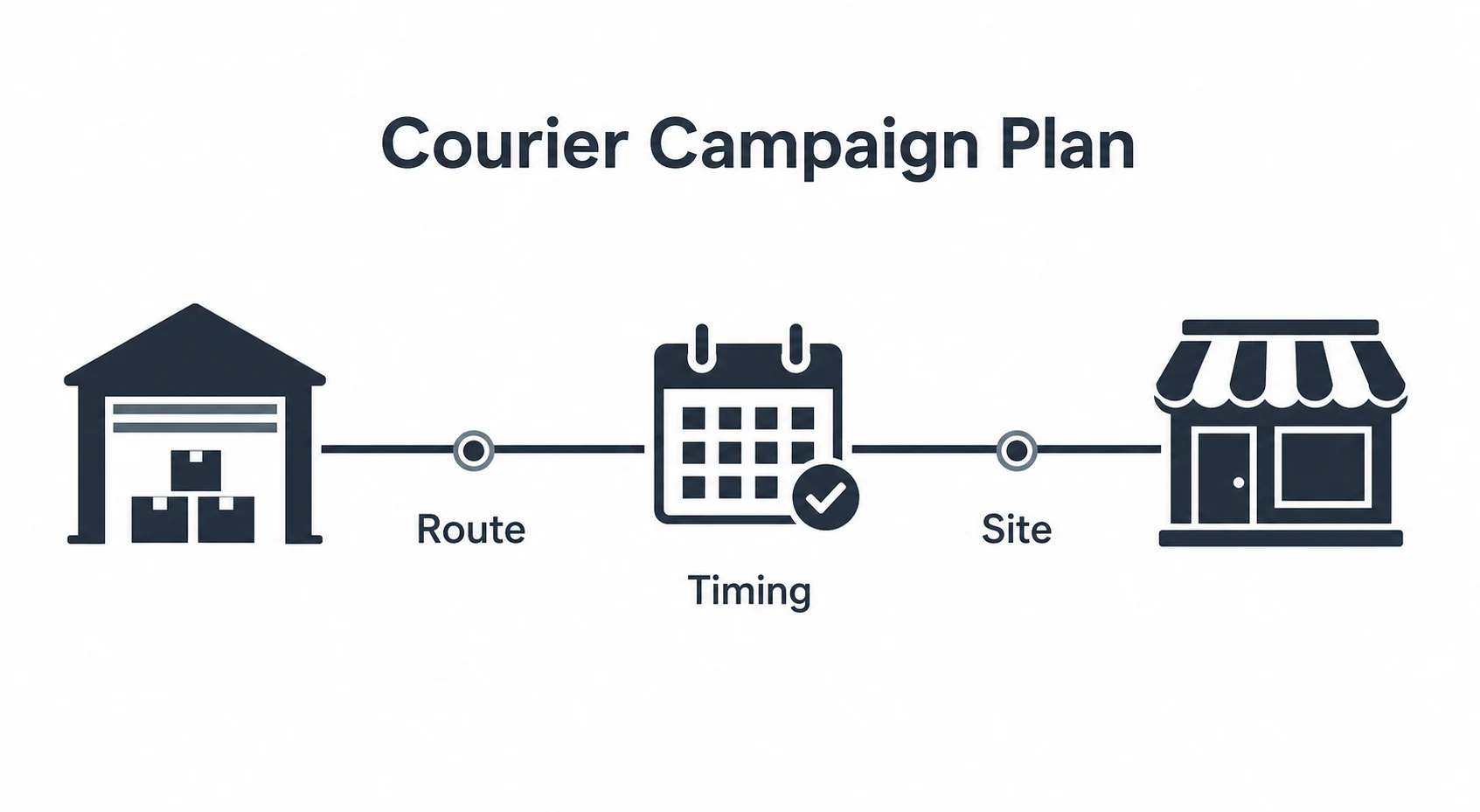
Courier planning gives campaign teams more control over the rollout. Instead of sending items out without a clear operational view, the distribution can be planned around service requirements, delivery windows, access needs and proof of completion.
This is especially useful when materials need to arrive at trading sites, offices, concessions, storage units or temporary locations. Each destination may have different opening hours, receiving procedures or contact points. Capturing those details before dispatch helps reduce failed delivery attempts and keeps the rollout moving.
Planning also helps when there are multiple consignments linked to the same campaign. Some sites may need extra materials, different versions or additional supporting stock. A courier process that allows for clear routing, accurate job details and responsive communication makes those differences easier to manage.
For urgent changes, flexible courier support can protect the campaign from disruption. A late print run, a replacement display item or an extra pack for a priority site may need to move quickly. In those moments, teams often look for reliable business courier services that can respond without losing sight of the wider rollout.
There is a clear overlap with urgent delivery planning, and businesses may find it useful to understand how same day courier services keep businesses running when time sensitive consignments need fast movement.
Why proof of delivery matters for POS campaigns
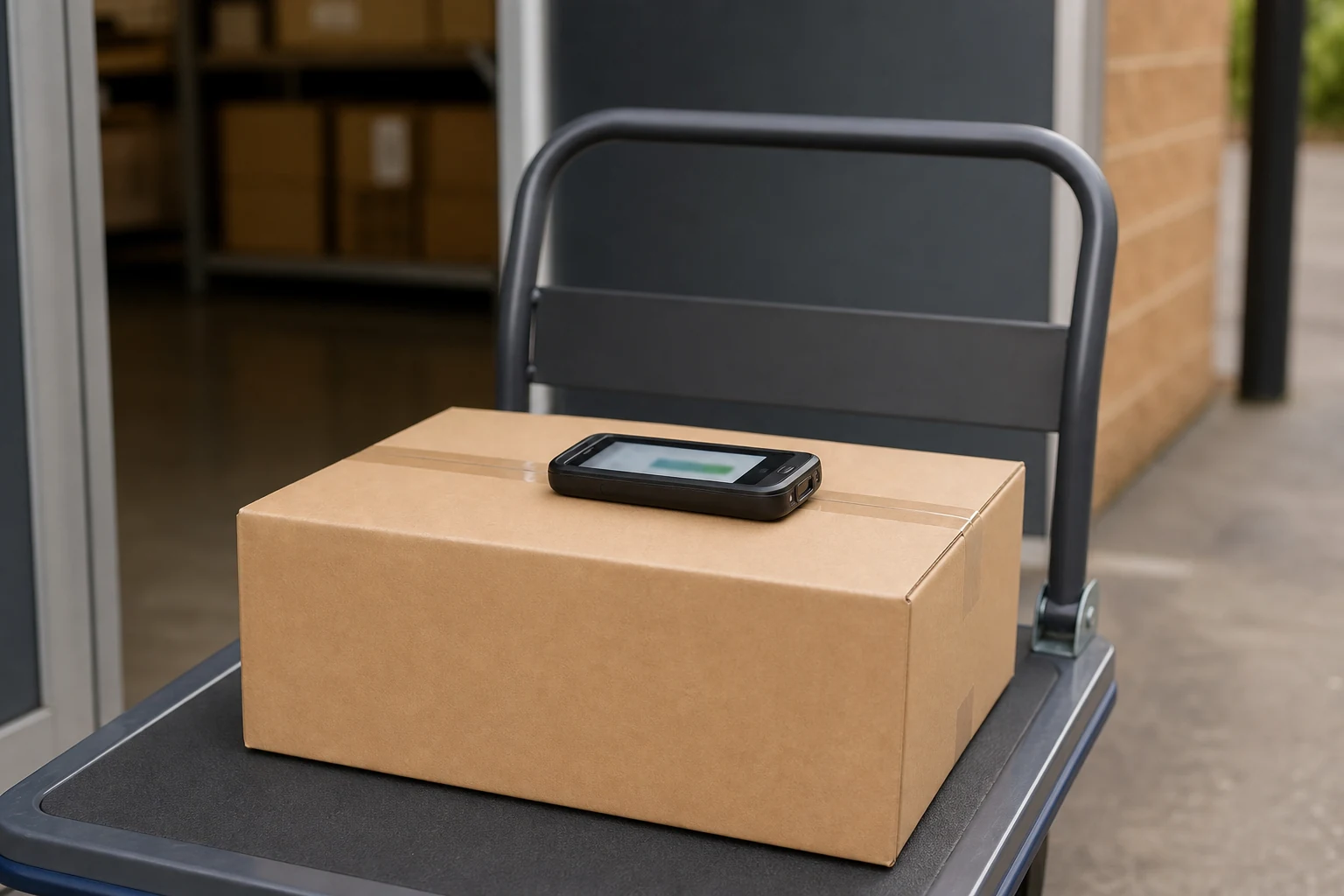
Proof of delivery is valuable in any business shipment, but it becomes especially important during POS distribution. A campaign team may need to know which sites have received materials, who accepted them and whether the delivery was completed as expected.
Without that visibility, teams can lose time chasing updates. Store contacts may be unsure whether items have arrived, central teams may not know which sites need support and agencies may struggle to confirm whether the campaign is ready to launch.
Proof of delivery helps create a clearer record. It can support internal reporting, give account teams confidence and help resolve questions quickly if a site says something has not arrived. It also gives businesses a practical way to spot exceptions, such as missed deliveries, incomplete information or destinations that need follow up.
For retail rollouts, this kind of delivery visibility is not just administrative. It helps protect the campaign standard. If every site needs to be live by a certain point, delivery evidence gives the team a better basis for checking progress and prioritising action where needed.
Businesses that want a deeper understanding of the process can read more about why proof of delivery matters for business shipments.
Common POS distribution problems and how to avoid them
Many POS distribution problems are preventable with clear preparation. One common issue is unclear pack content. If cartons are packed without a consistent list, receiving teams may not know whether they have everything. A simple pack list for each destination can make checking much easier.
Another issue is mixed messaging between central teams, print suppliers, agencies and site contacts. If one team changes the delivery date but another still expects the original schedule, confusion follows. Keeping a single agreed delivery plan helps everyone work from the same information.
Access information is also easy to overlook. Some sites have specific delivery entrances, restricted hours or contact procedures. Recording those details early helps the courier complete deliveries more smoothly.
Packaging should match the materials being sent. POS items can include sharp corners, delicate print finishes, folded sections and oversized pieces. Strong outer packaging, sensible internal protection and clear labelling all help reduce handling risk.
Finally, businesses should allow for exceptions. Even a well planned rollout may need a replacement item, a revised destination or a late addition. A good distribution process leaves room for controlled changes, with clear communication and accurate delivery records.
- POS distribution helps retail teams keep promotional materials consistent across every site.
- Clear allocation, labelling and packaging reduce confusion before delivery even begins.
- Courier planning supports launch timing, delivery visibility and controlled changes.
- Proof of delivery gives campaign teams a clearer record of what has arrived and where.
- A specialist approach is most useful when materials are mixed, time sensitive or linked to a wider campaign plan.
Frequently asked questions
What is POS distribution?
POS distribution is the planned movement of point of sale materials such as posters, display items, shelf materials, counter units and campaign packs to retail or business locations.
Why is POS distribution important for retail rollouts?
It helps each site receive the correct materials at the right time, which supports a consistent campaign and reduces confusion for store teams and central teams.
What information should be prepared before booking POS distribution?
Useful details include destination lists, contact names, delivery instructions, pack contents, quantities, launch timings and any special handling requirements.
Can POS distribution support urgent campaign changes?
Yes. When a campaign needs replacement materials, extra stock or a time sensitive delivery, courier support can help move those items quickly while keeping records clear.
Plan your POS distribution with confidence
If your business is preparing a retail rollout, LTS Couriers can help you move POS materials with care, clarity and practical delivery control.