
Sending hazardous goods is not the same as sending an ordinary parcel. Even small mistakes in classification, packaging or paperwork can create safety risks and put the customer, courier and recipient in a difficult position.
For buyers arranging regulated deliveries, the safest approach is to use an ADR courier that understands the rules before collection happens. That way, the consignment can be checked, handled and transported in a controlled, compliant way.
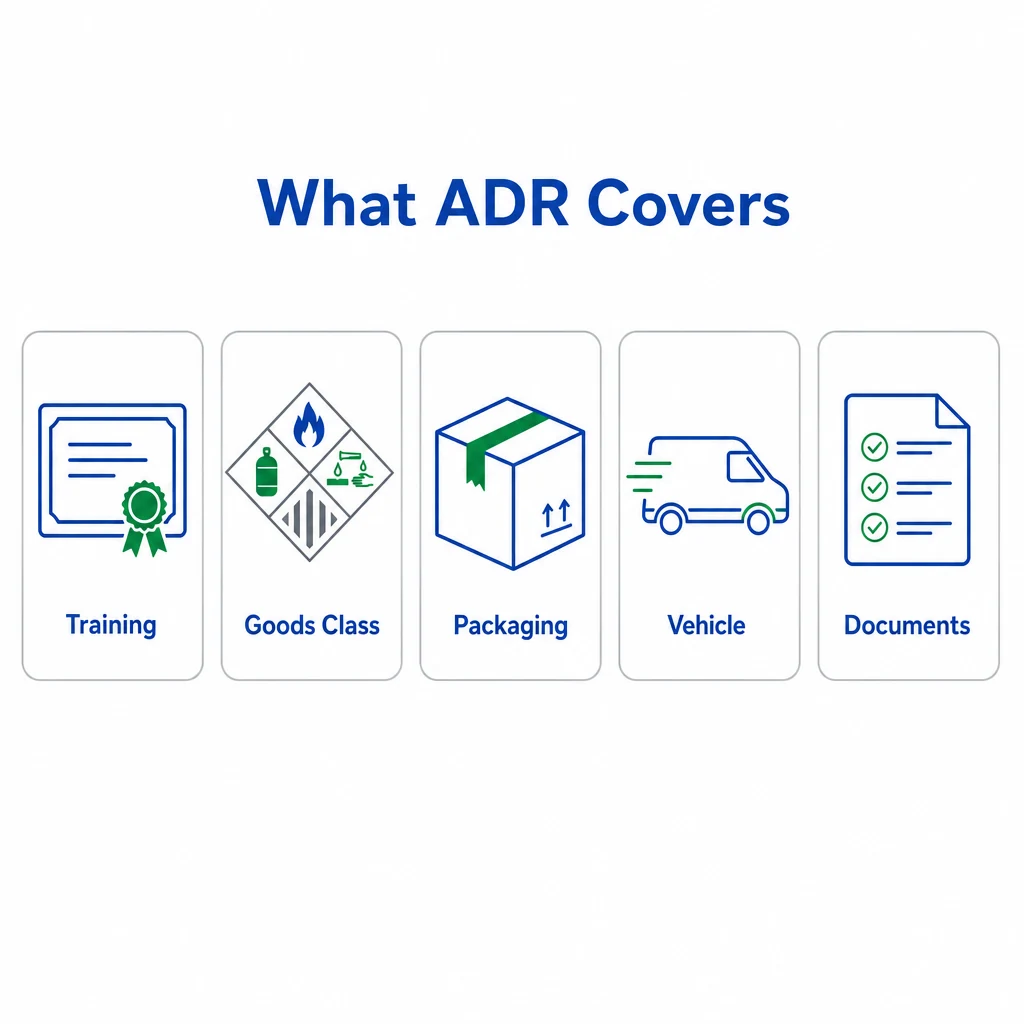
What ADR certification actually covers
ADR is the framework applied to the road transport of dangerous goods. In the UK, it sits alongside national regulations and sets expectations for how regulated goods are classified, packed, labelled, documented and carried.
In practical terms, ADR can apply to many products that businesses handle every day, including:
- Flammable liquids, paints, solvents and adhesives
- Gases and aerosols
- Corrosive substances and cleaning chemicals
- Batteries and other energy storage products
- Toxic, oxidising or environmentally hazardous materials
Not every hazardous item requires the same transport controls. Some goods may travel under limited quantity or other exemptions, while others need trained drivers, specific vehicle equipment, load controls and transport documents.
That is why the phrase ADR certified courier is important. It signals that the courier is not simply moving a box; they understand the handling and compliance context around the goods.
The buyer risk of using a standard courier
A standard parcel courier may be excellent for ordinary goods, but hazardous consignments introduce extra duties. If a shipment is treated like a normal parcel when it is actually regulated, the risk is passed along the chain.
Common risk points include:
- Goods not being declared accurately at booking
- Incorrect or missing UN numbers, hazard labels or packaging marks
- Incompatible products being loaded together
- Insufficient packaging for the substance being carried
- Drivers not having the right information in the event of an incident
The commercial risk is not only about enforcement. A failed collection, refused delivery, damaged package or delayed handover can disrupt production, customer service and internal compliance processes.
A specialist ADR courier helps reduce those risks by asking the right questions early. That can include checking the product type, packaging, quantity, destination requirements and whether the shipment falls within an exemption or needs a fully controlled ADR movement.
How ADR-trained handling keeps deliveries controlled
ADR-trained handling is about consistency. From the moment a consignment is booked, the courier should understand what is being collected, how it should be presented and what controls apply during transport.
Good practice may include:
- Confirming the goods classification before collection
- Checking labels, marks and package condition
- Using suitable vehicles for the goods and quantity involved
- Securing the load to prevent movement in transit
- Keeping incompatible goods apart where required
- Carrying relevant safety equipment and instructions where applicable
This does not mean making the delivery process complicated for the customer. It means putting a clear process around the job so the shipment is moved with the right level of control.
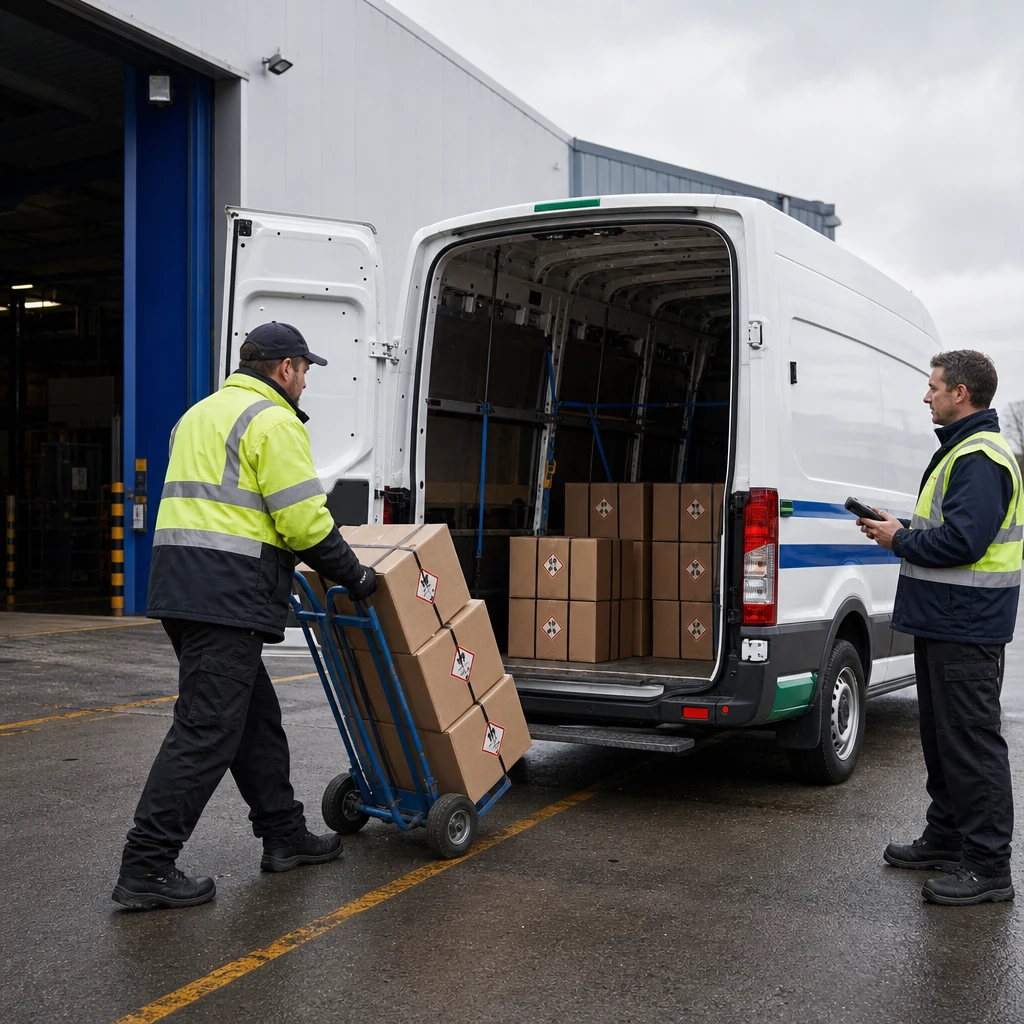
For sensitive consignments, this can also support chain of custody. Clean vehicle loading, professional drivers, proof-of-delivery devices and clear communication all help buyers show that the delivery was managed properly from collection to completion.
Why documentation matters as much as transport
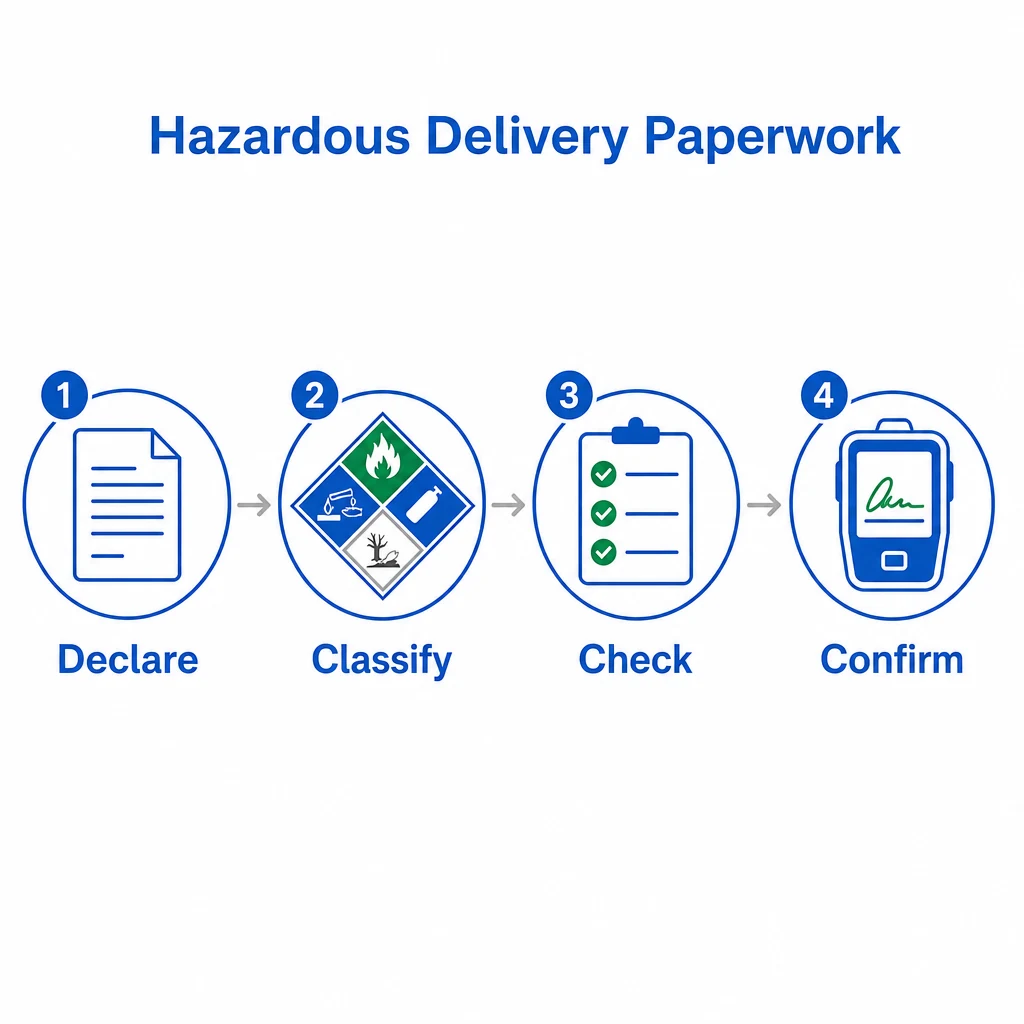
Documentation is a key part of ADR delivery because it tells everyone in the transport chain what is being carried. Without accurate information, even a well-equipped courier cannot make the right decisions.
Depending on the goods and quantities, documentation may need to include the UN number, proper shipping name, hazard class, packing group, tunnel code, package count and total quantity. Other information may also be required depending on the consignment.
An ADR-aware courier can help identify what information is needed, but the consignor must still provide accurate details. A courier cannot turn an undeclared parcel into a compliant ADR delivery after collection.
Good process protects both sides. The customer provides the product and shipping information, while the courier checks that the delivery can be accepted, routed and handled correctly. This shared awareness is what keeps regulated movements controlled.
How to choose an ADR courier
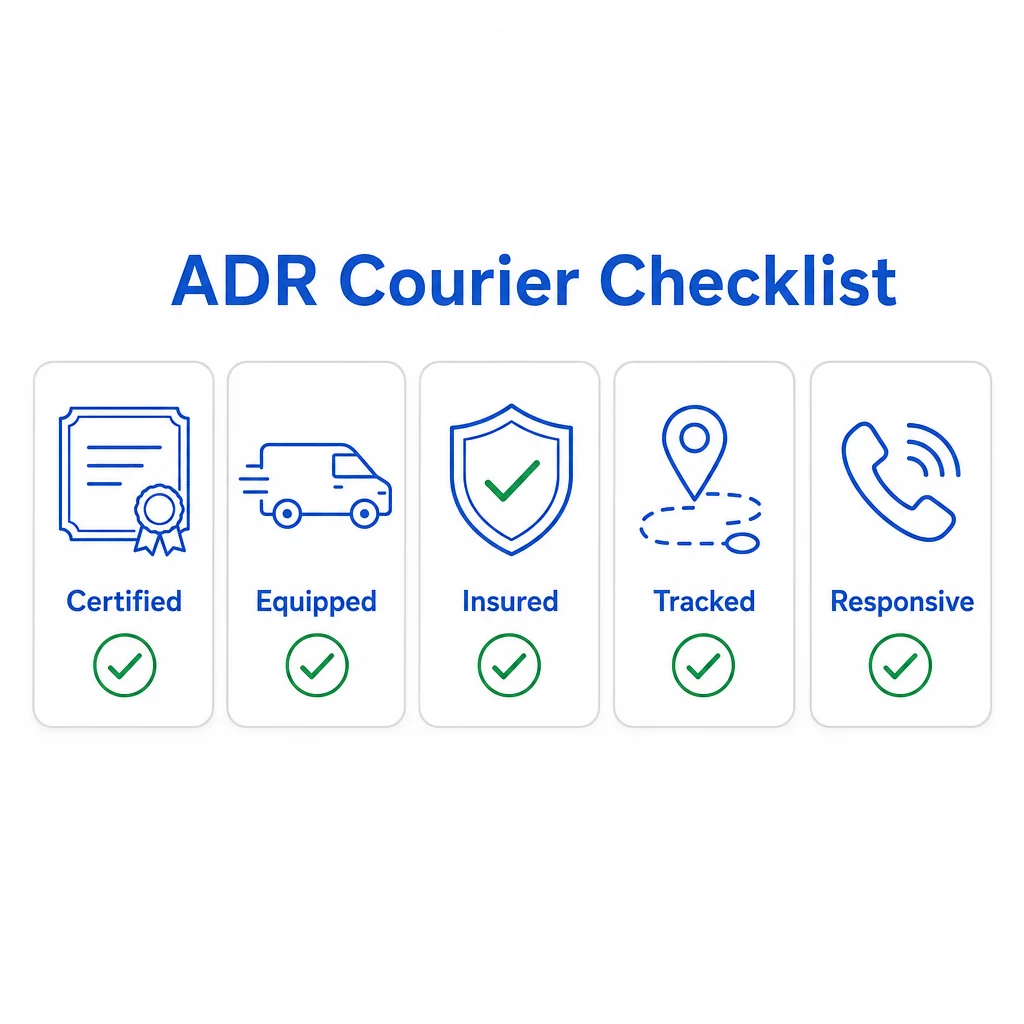
When searching for an ADR courier, ADR delivery or ADR transport services, look beyond the phrase itself. The right provider should be able to explain how they manage regulated consignments before they accept the job.
Useful questions to ask include:
- Do you handle the specific hazard class involved?
- What information do you need before collection?
- Are drivers trained for the type of movement required?
- What vehicle equipment is used where required?
- How is proof of delivery captured?
- Who will contact me if the shipment details are unclear?
For more detail on arranging compliant hazardous goods transport, see the dedicated ADR courier service.
The right provider should make the process feel clear and controlled. They should help you understand what is needed, confirm whether the delivery is suitable and keep communication straightforward from booking to delivery.
- Hazardous goods should not be treated like ordinary parcels.
- ADR certification helps ensure trained handling, suitable transport and correct documentation awareness.
- The consignor must provide accurate product and shipment details before collection.
- A specialist ADR courier helps keep regulated deliveries controlled from booking to proof of delivery.
Frequently asked questions
Do all hazardous goods need an ADR courier?
Not always. Some goods may fall under limited quantity or other exemptions, depending on classification, packaging and quantity. However, they still need to be assessed correctly before transport.
What information should I provide when booking ADR delivery?
You should be ready to provide the UN number, proper shipping name, hazard class, packing group if applicable, quantity, package type and any relevant safety information.
Can a courier classify my goods for me?
The consignor is responsible for accurate classification and declaration. An ADR-aware courier can help identify what information is needed, but they rely on correct details from the sender.
Why is proof of delivery important for ADR consignments?
Proof of delivery provides a clear record that the regulated consignment reached the intended recipient. It supports traceability, internal compliance and customer confidence.
Need help with an ADR delivery?
If you are arranging a hazardous goods movement, speak to a courier team that understands regulated transport and clear communication.